Assessment before treatment
Dissolving hyaluronic-acid filler with hyaluronidase
Hyaluronidase may be used for some hyaluronic-acid fillers, but dissolving is itself a healthcare procedure that requires assessment.
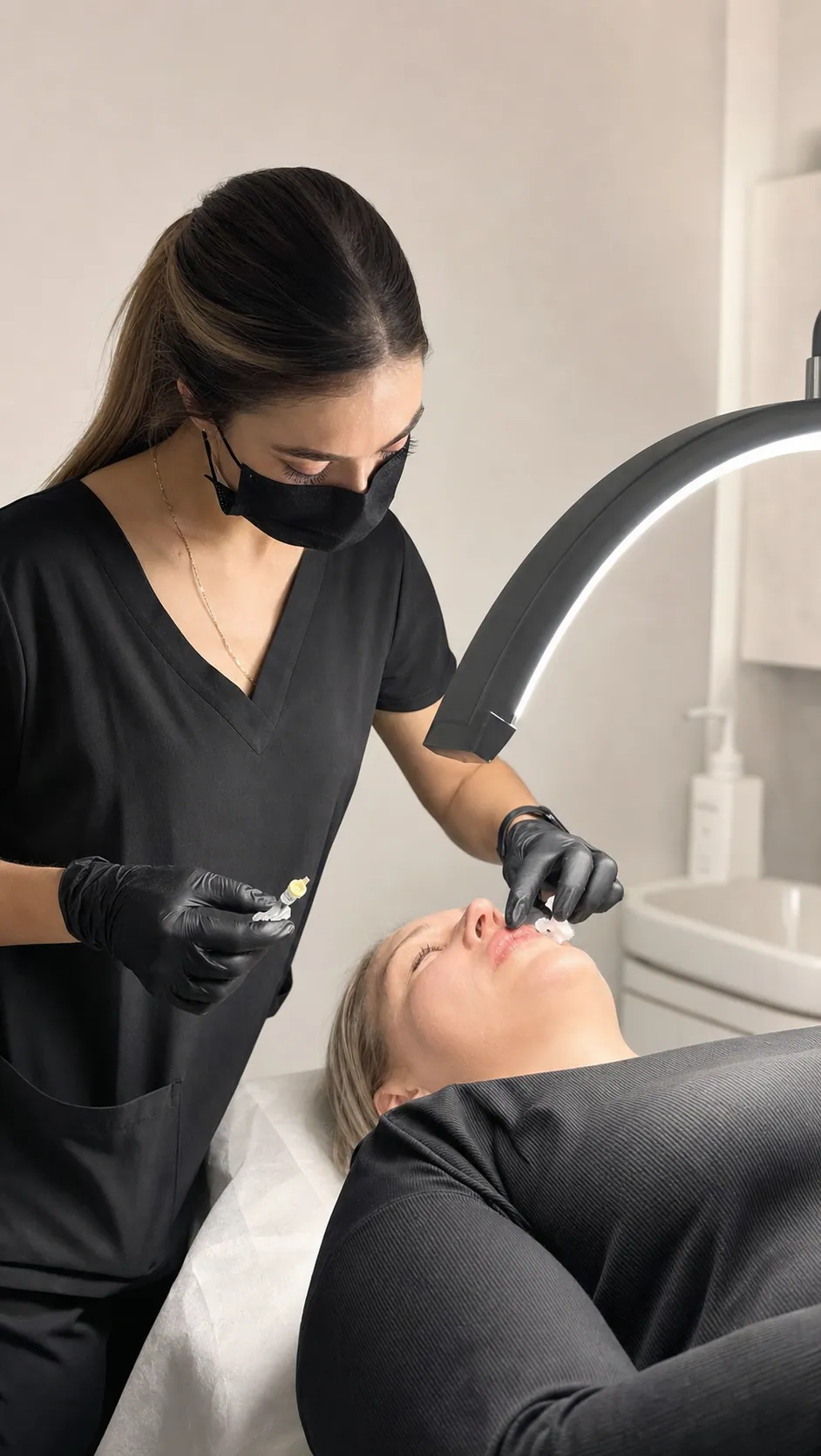
When may dissolving be considered?
It may be considered for an unsuitable result, migration or a medically assessed complication. Not every concern requires dissolving.
What does hyaluronidase do?
It breaks down hyaluronic acid and cannot be limited perfectly to one tiny spot. It does not dissolve every filler material.
What are the risks?
Swelling, tenderness, bruising and allergic reactions are possible. Urgent situations follow a separate clinical protocol.
Why assess first?
The practitioner needs to know the product, treatment history, timing and symptoms before recommending action.
Frequently asked questions
Clear answers to common questions
Can every filler be dissolved?
No. Hyaluronidase acts on hyaluronic acid, not every filler material.
Does one session remove everything?
The response varies and a complete result cannot be promised from one session.
Can lips be refilled immediately?
Timing is decided after tissue recovery and reassessment.
Verified BeautyBell information
Check these details before booking
Prices and products
Prices and productsKaterina Gorbell and qualifications
Katerina Gorbell and qualificationsTammisto, Vantaa
Tammisto, VantaaArabianranta, Helsinki
Arabianranta, HelsinkiFree photo consultation
Free photo consultationKnowledge centre
Related articles
Safety and contraindications
Common reactions, rare serious risks, contraindications and questions to ask before filler treatment.
Read the articleFiller migration
What migration means, what it may look like and how it is professionally assessed.
Read the articleCold sores and lip filler
Why a history of cold sores matters before lip filler and when treatment must be postponed.
Read the articleNext step
Get a personal assessment before deciding.
This guide does not replace an individual suitability assessment at the clinic.